With authority and rigor, Wolff employs ethics, law, science, and compassion to call out the anti-humanism roots underpinning the (un)intelligent design of the current correctional system and rings in a new way of intelligently designing and maintaining a just, fair, and person-centered system of asylum, of and for humanity.

Topic: prison
Violence against incarcerated women: predicting risk through the lens of childhood harm
A sample of 564 incarcerated women was used to examine the link between in-prison victimization, childhood (physical, sexual, and emotional) harm, and mental illness.
The prevalence of prison-based physical and sexual victimization in males and females: a systematic review and meta-analysis
Rates of prison-based interpersonal harm, while high, varied significantly by type of victimization, sex, and study methodology.
Understanding polyvictimization in prison: Prevalence and predictors among men inmates in Spain
Victimization—physical, sexual, and emotional—is part of prison life for a sizable proportion of incarcerated people. Research has primarily focused on the prevalence and predictors of physical or sexual victimization inside prisons located in the United States. Very...
Childhood adversity classes of incarcerated men and their association with prison-based psychological distress and substance use
The current article investigates the association between childhood adversity histories and prison-based psychological distress and substance use with an incarcerated adult male sample using a person-centered approach. Our study uses self-reported data from 943 men...
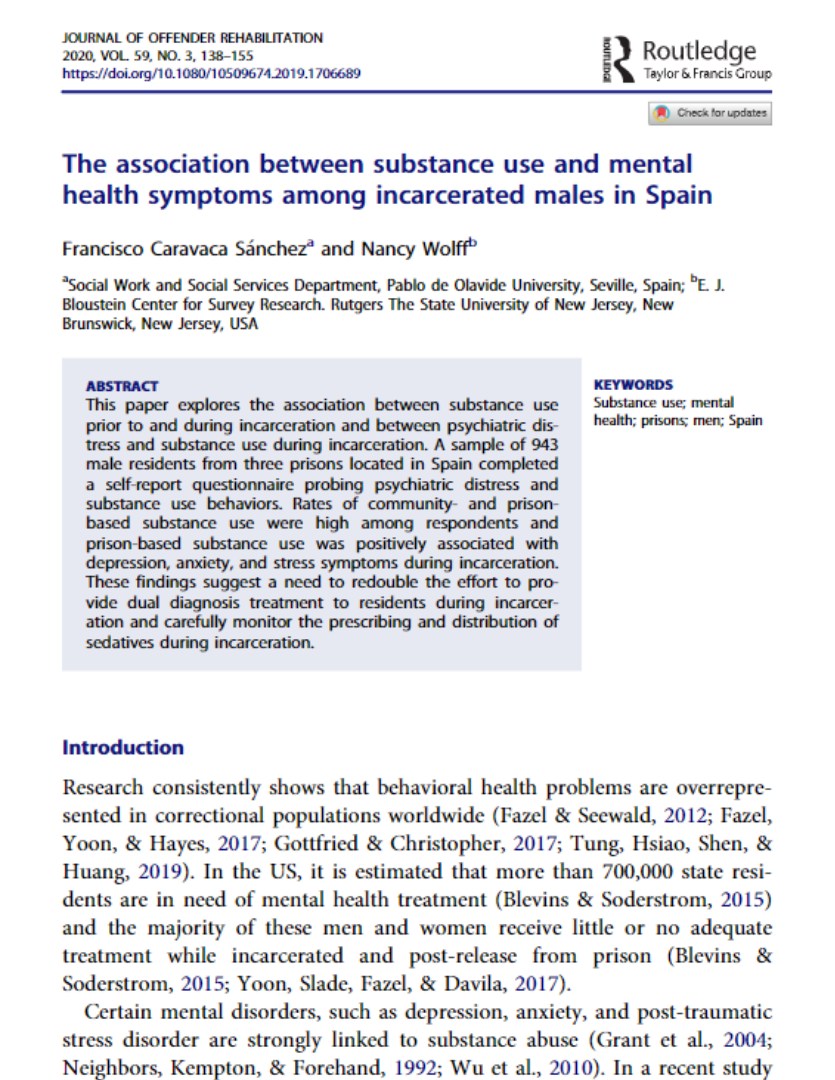
The association between substance use and mental health symptoms among incarcerated male in Spain
This paper explores the association between substance use prior to and during incarceration and between psychiatric distress and substance use during incarceration. A sample of 943 male residents from three prisons located in Spain completed a self-report...
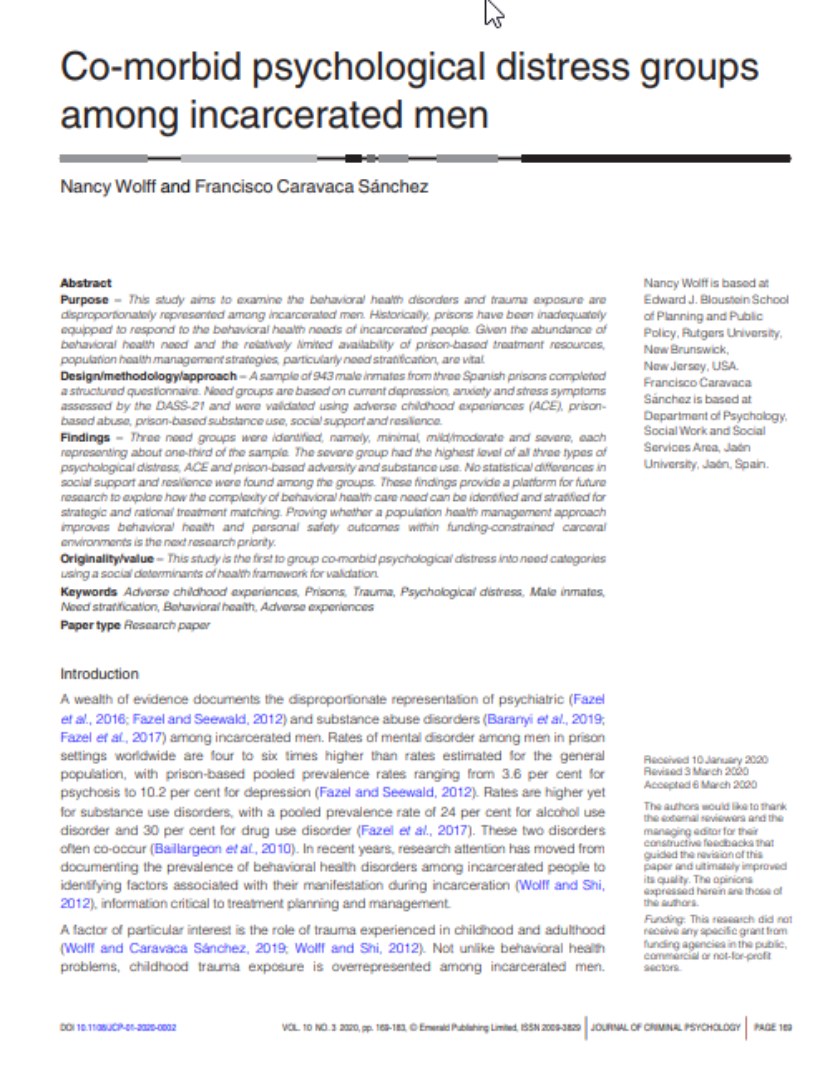
Co-morbid psychological distress groups among incarcerated men
Purpose This study aims to examine the behavioral health disorders and trauma exposure are disproportionately represented among incarcerated men. Historically, prisons have been inadequately equipped to respond to the behavioral health needs of incarcerated people....
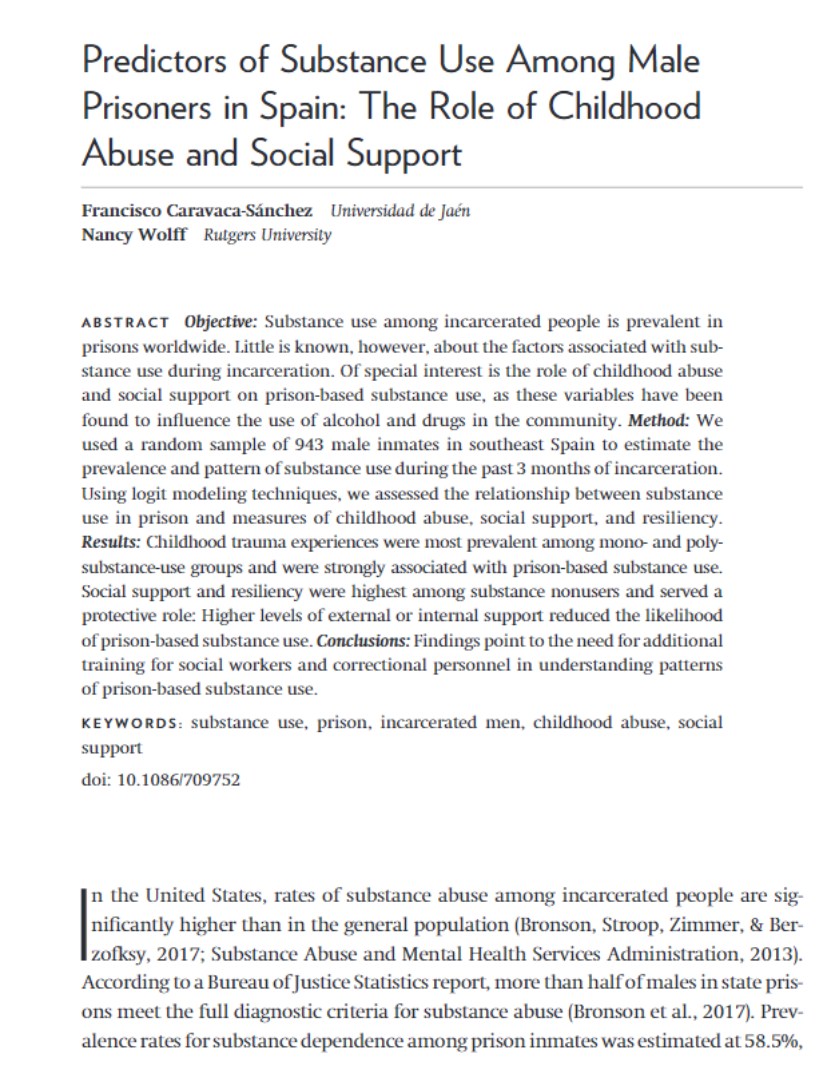
Predictors of substance use among male prisoners in Spain: The role of childhood abuse and social support
Objective: Substance use among incarcerated people is prevalent in prisons worldwide. Little is known, however, about the factors associated with substance use during incarceration. Of special interest is the role of childhood abuse and social support on prison-based...
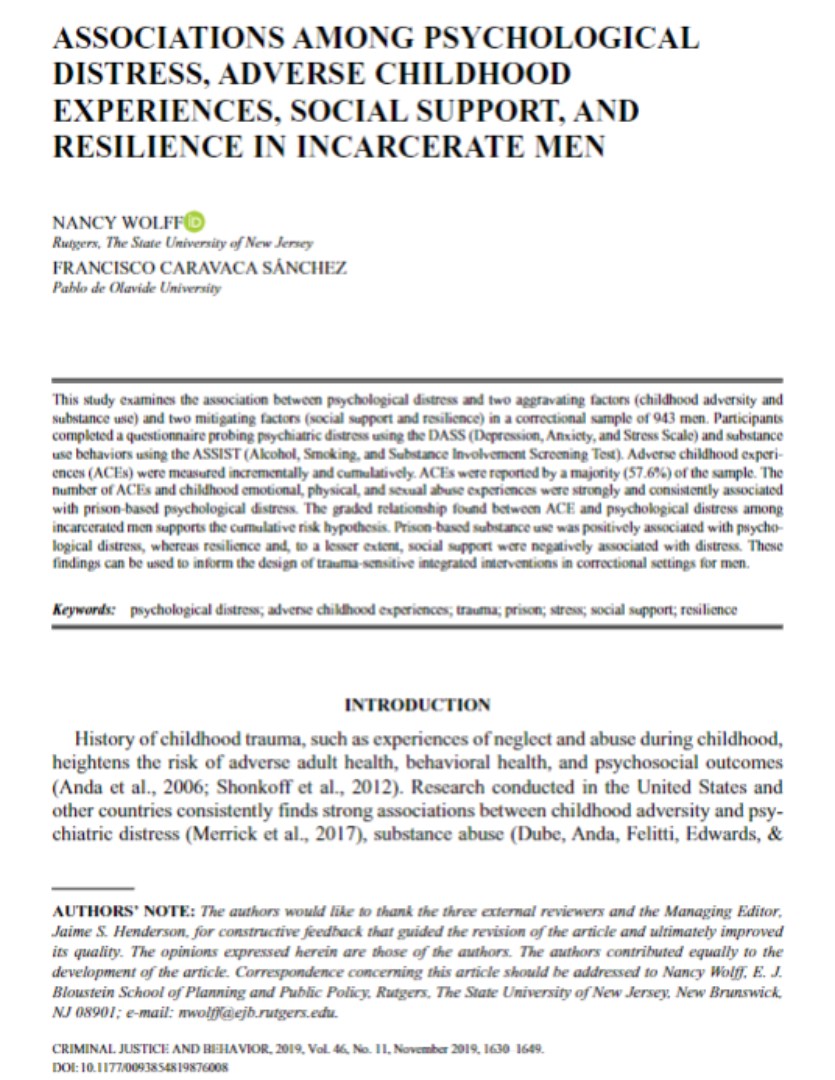
Associations among psychological distress, adverse childhood experiences, social support, and resilience in incarcerate men
This study examines the association between psychological distress and two aggravating factors (childhood adversity and substance use) and two mitigating factors (social support and resilience) in a correctional sample of 943 men. Participants completed a...
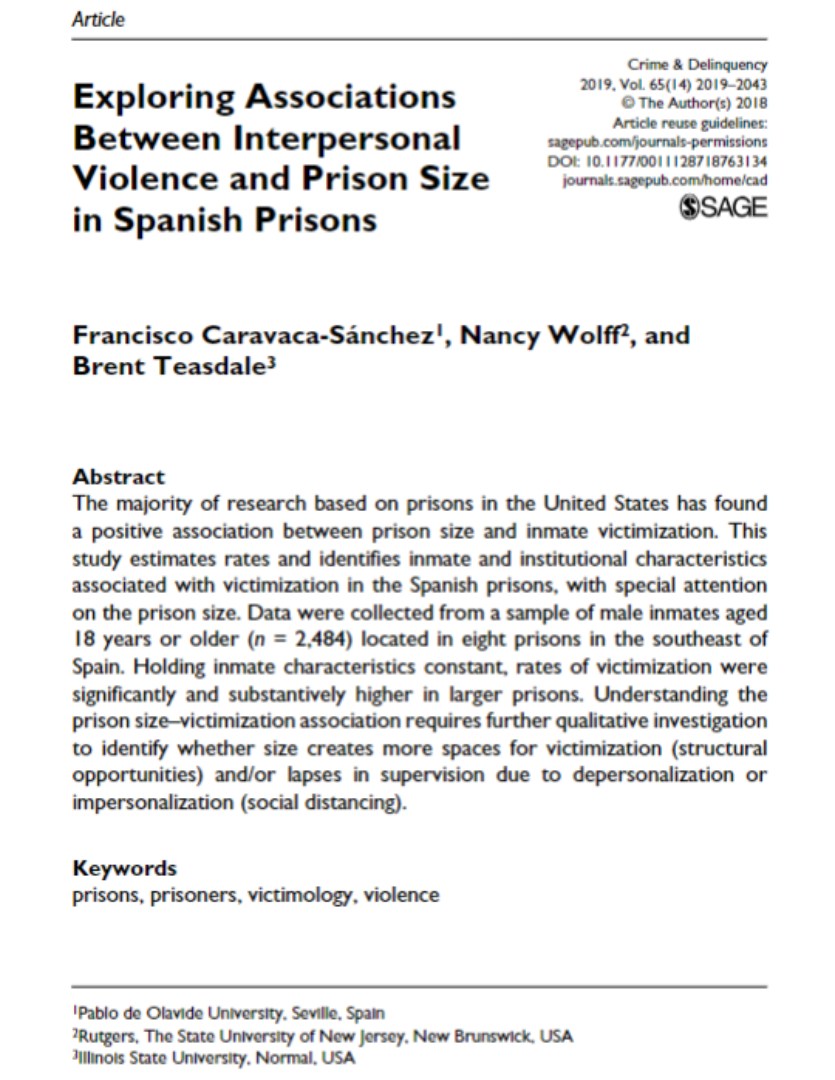
Exploring associations between interpersonal violence and prison size in Spanish prisons
The majority of research based on prisons in the United States has found a positive association between prison size and inmate victimization. This study estimates rates and identifies inmate and institutional characteristics associated with victimization in the...